
Thorrablot is one of the most distinctive cultural traditions in Iceland, hands down! A midwinter festival that brings people together to celebrate heritage, resilience, and the enduring spirit of Icelandic community during the darkest time of year. In fact, it is actually rooted in centuries old customs… Thorrablot offers a fascinating glimpse into Icelandic history, storytelling, and culinary traditions. And today we are going to tell you all about it from a firsthand experience!
The History of Thorrablot (Þorrablót)
Thorrablot (or in Iceland: Þorrablót) takes place during the month of Þorri in the old Norse calendar. To illustrate, it is typically from late January through February. Historically, this period marked the heart of winter, when survival depended on careful preservation of food and strong social bonds.
Meanwhile, the festival’s name refers to ancient midwinter sacrifices or feasts believed to honor Þorri. Who is he? He was a mythological figure associated with winter. While the exact pagan rituals faded after Iceland’s Christianization, the spirit of gathering to share food and stories endured time. Furthermore, in the 19th century, during a period of growing national identity, Icelanders revived Thorrablot as a cultural celebration. Additionally, today, communities, families, and organizations host festive yearly gatherings that blend historical homage with modern fun. To illustrate, this often featuring speeches, songs, skits and all kinds of other playful humor.
What Happens at a Thorrablot Celebration?
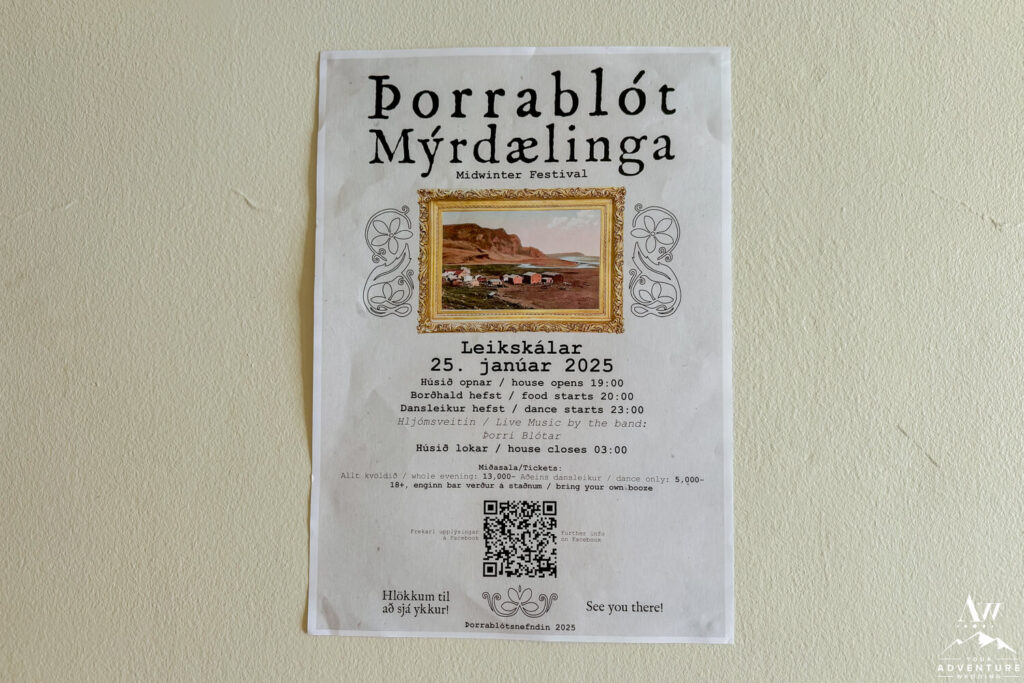
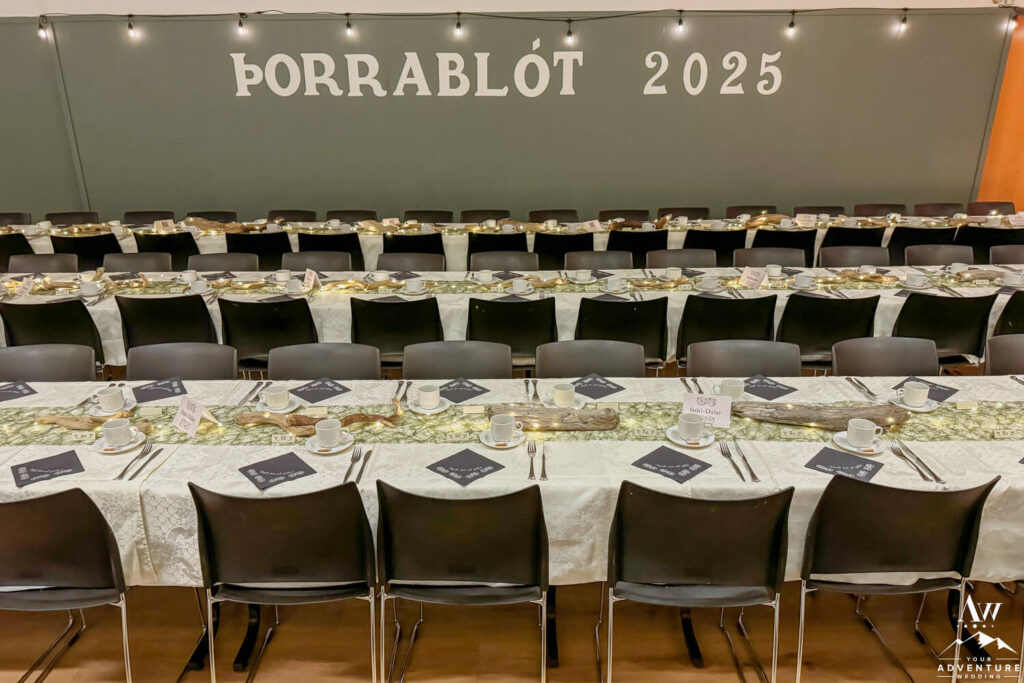
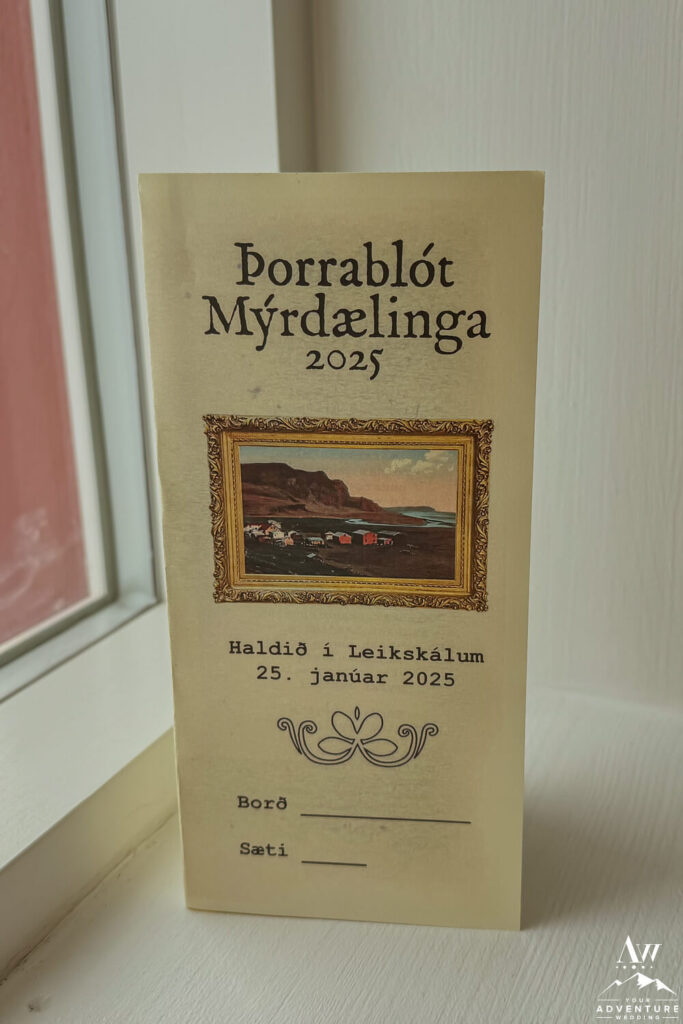
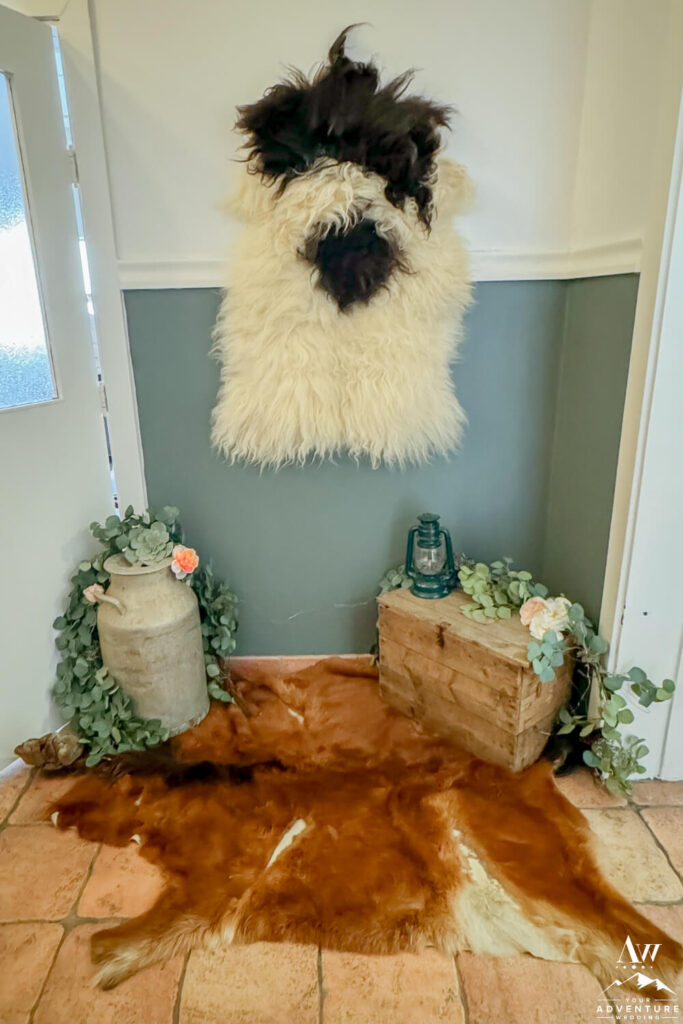
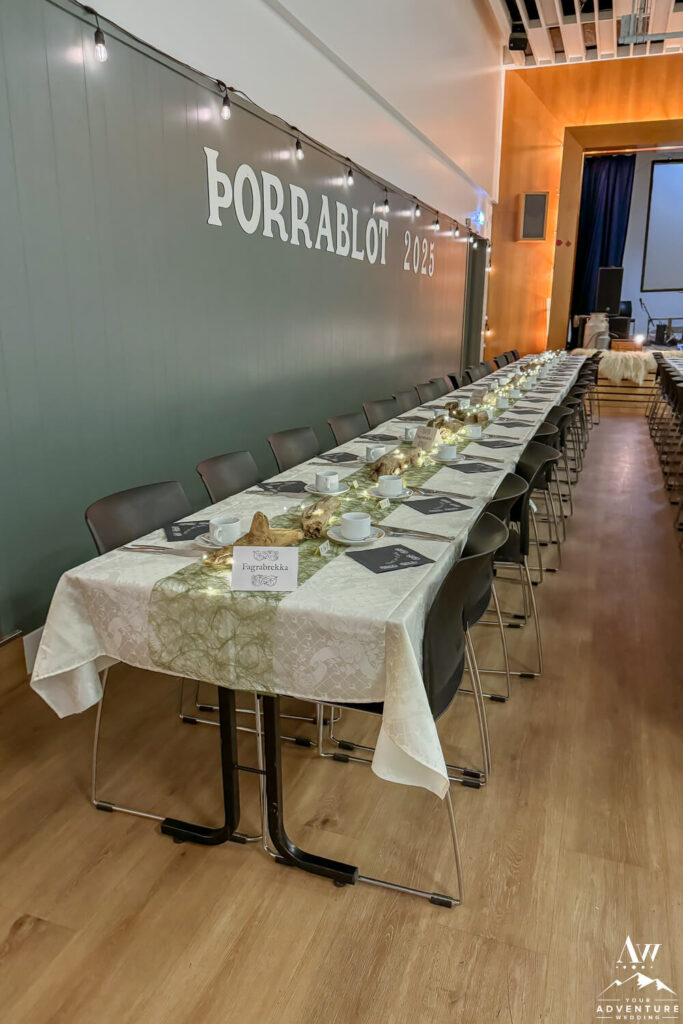
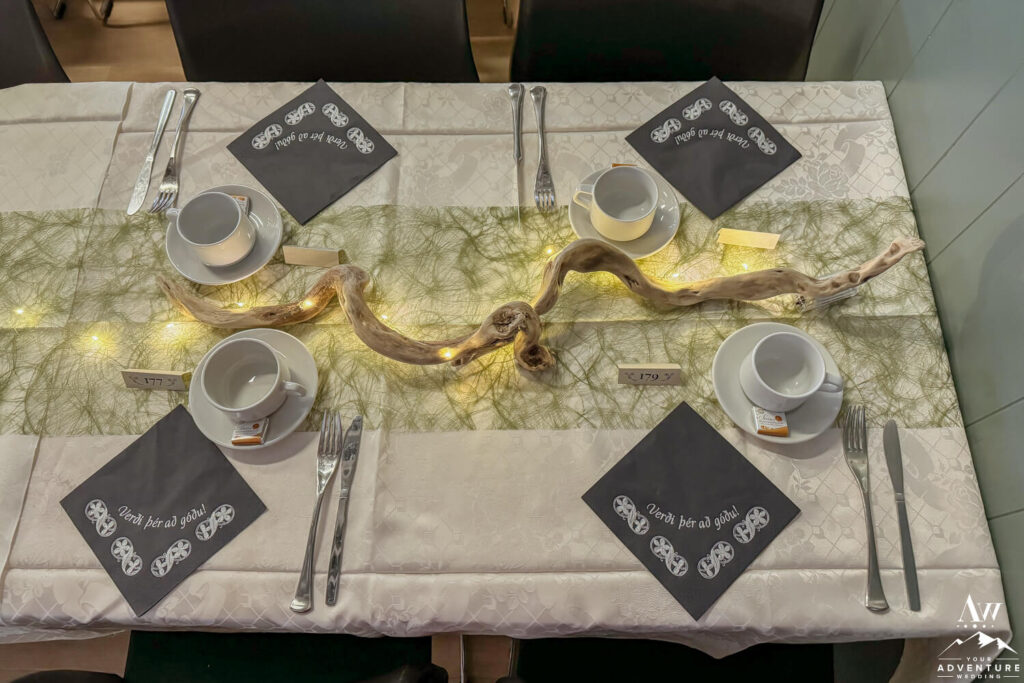
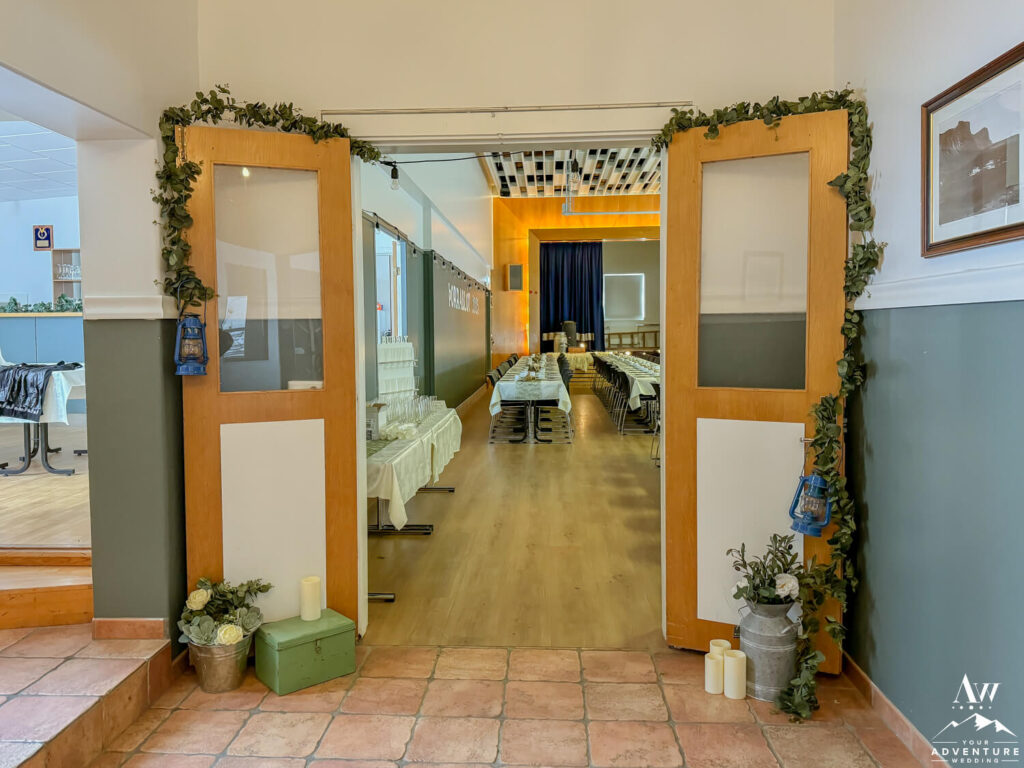
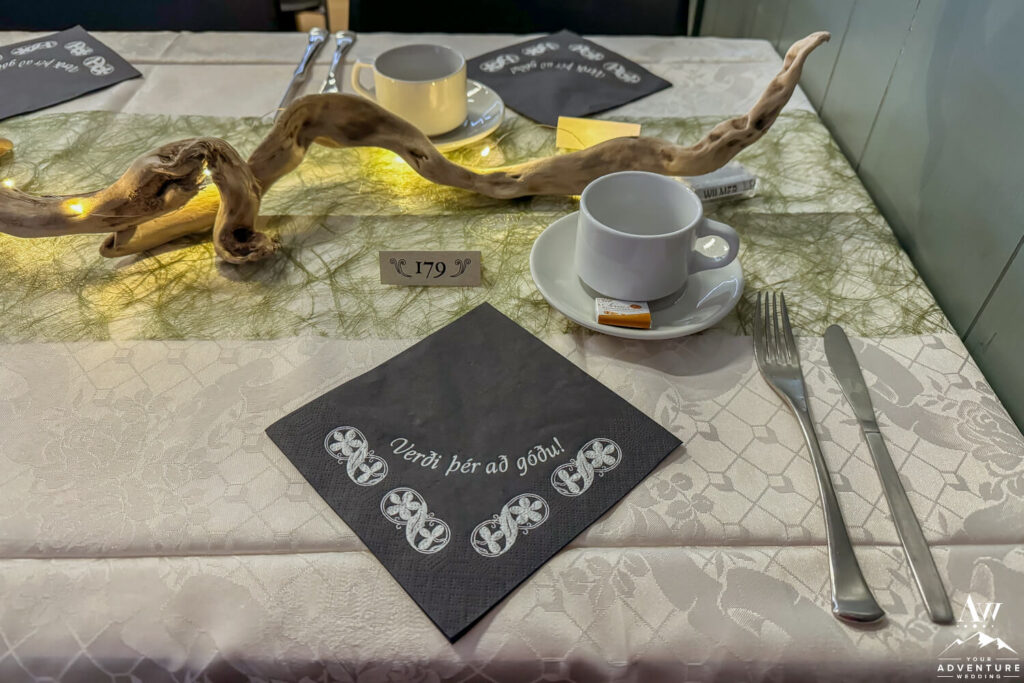
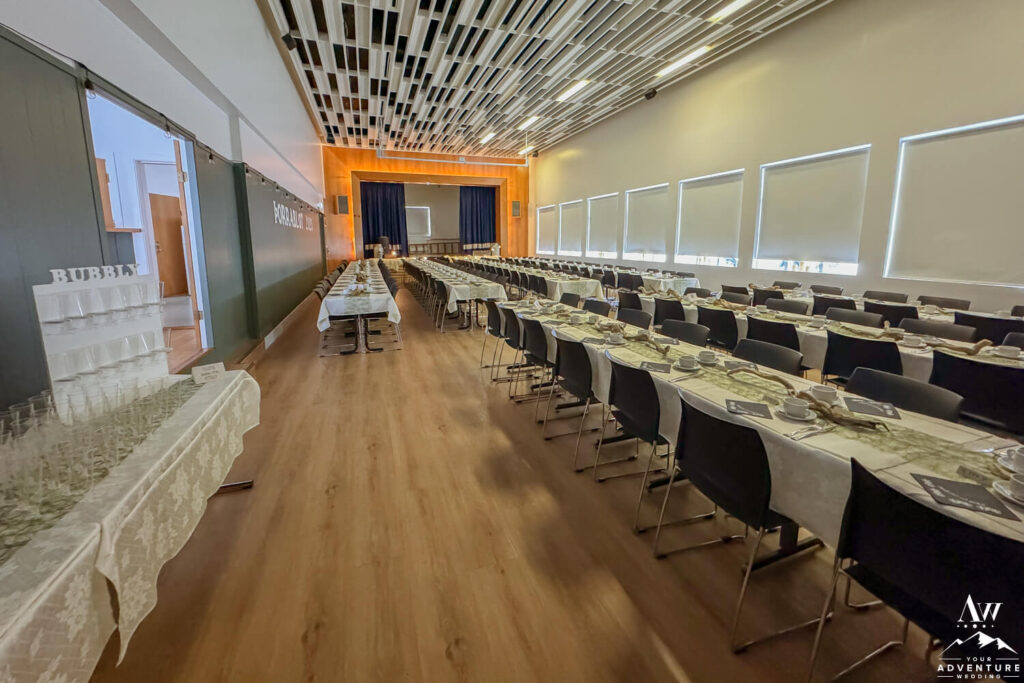
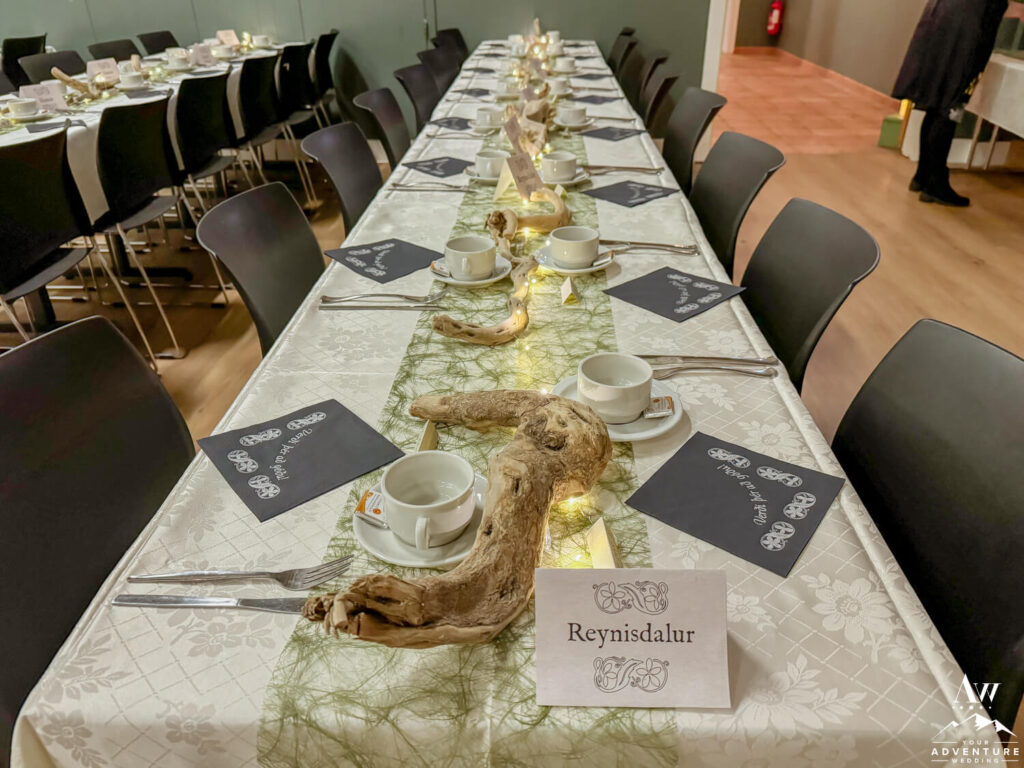
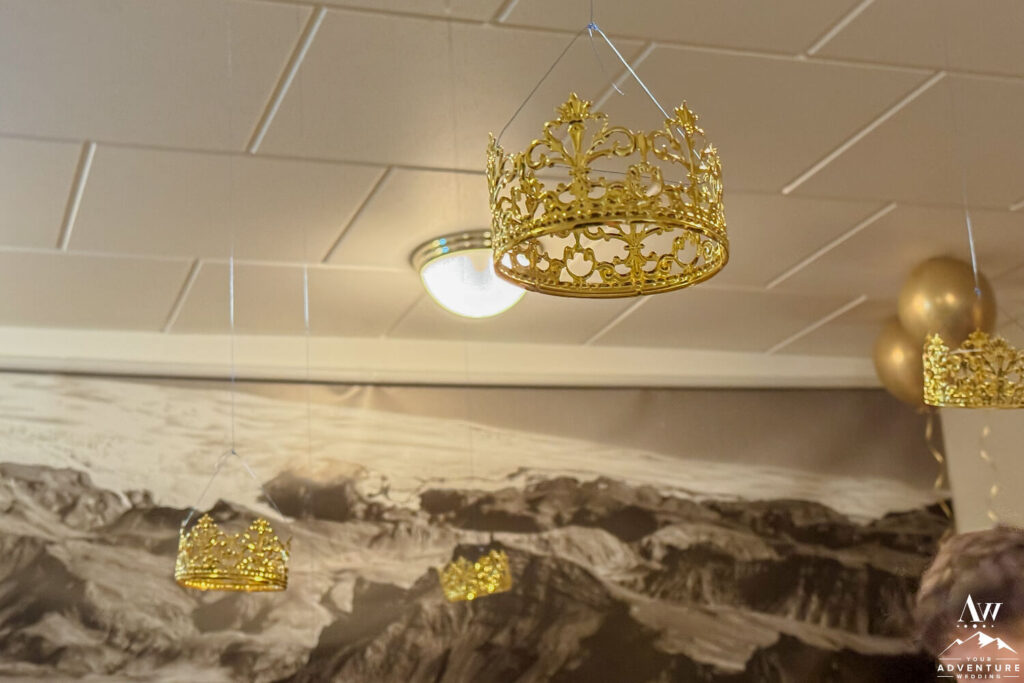
First, a typical Thorrablot is lively and communal. Second, there is usually a committee made up of local village people (both couples and singles) which works on the plan the entire year. Third, a theme that is chosen. For example, the year my husband and I served (2025 in Vik) we had the theme “Old Iceland / Old Vik.” Decorations follow suit, the committee dresses to represent, and usually the tickets and any media (like a 2-3 issues of newspapers called “The Half-wit” follow).
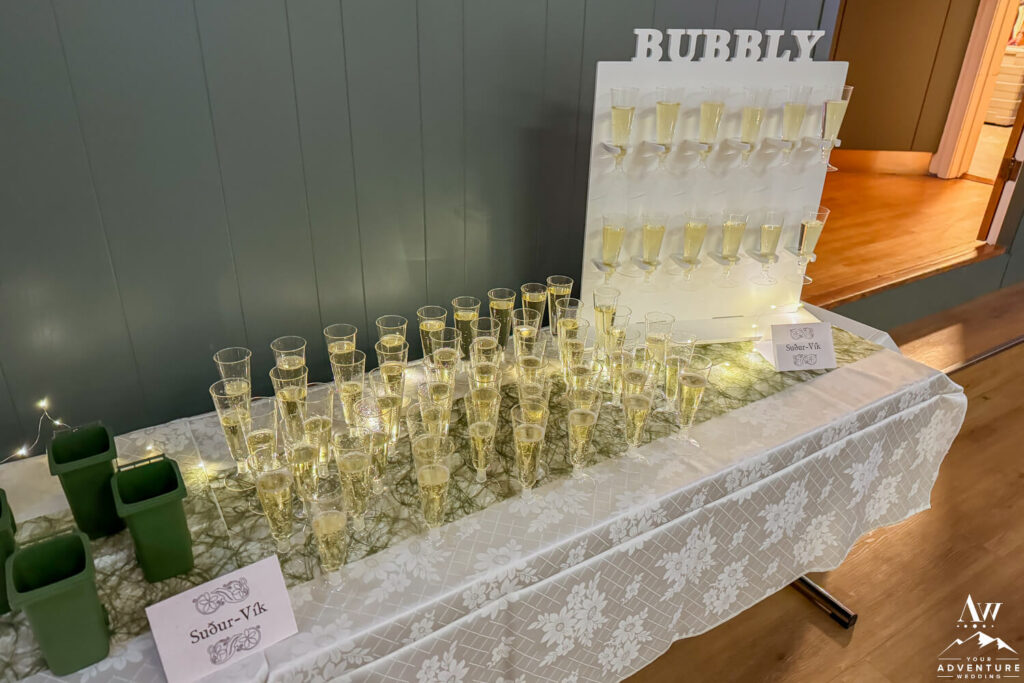
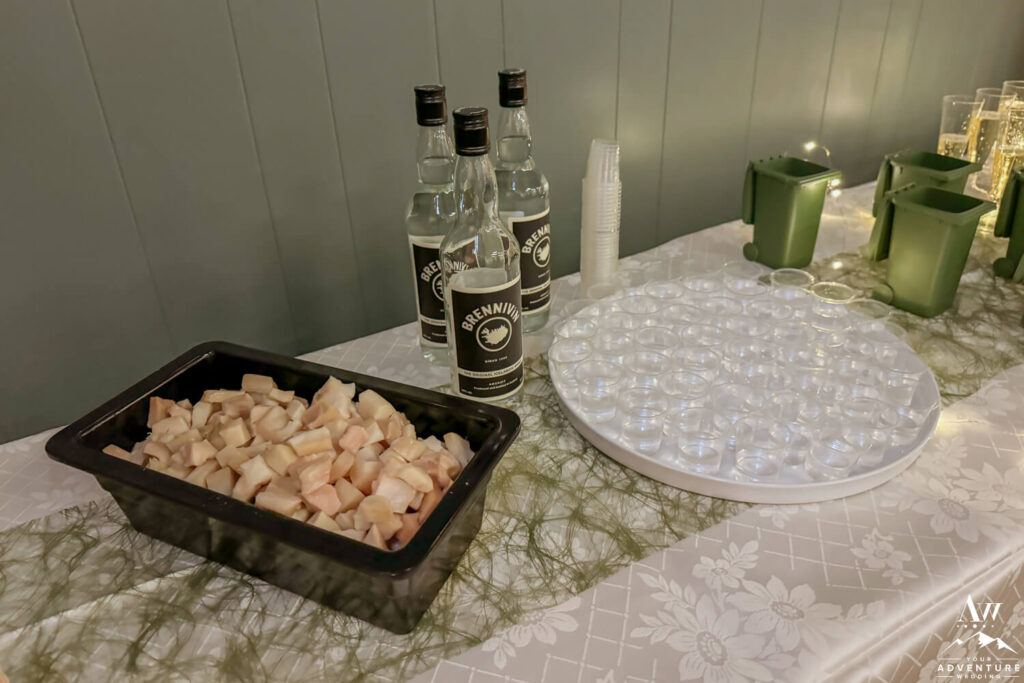
Next, upon arrival guests are greeted by the committee members, pieces of fermented shark, shots of Brennivin and non-alcoholic sparkling. Guests gather around long tables, in small towns bring their own alcohol and mingle until the hosts introduce the event. Additionally, at this point everyone lines up to enjoy the traditional foods which I’ll detail out below. Afterwards, it is time for lots of singing and the main event, the show! For instance, in my town of Vik in South Iceland, the committee pre-record skits making fun of things that happened throughout the year or poking fun at some people in the town. Following the event turns into a dance that is a mix of Icelandic folk dancing and modern.
Regardless of the town, the common elements in Thorrablot are enjoying traditional foods, listen to speeches or storytelling (sometimes comedic or satirical), sing together, celebrating Icelandic heritage. Overall, the atmosphere is warm and festive and an absolute reminder that winter is easier when shared!
Traditional Thorrablot Food
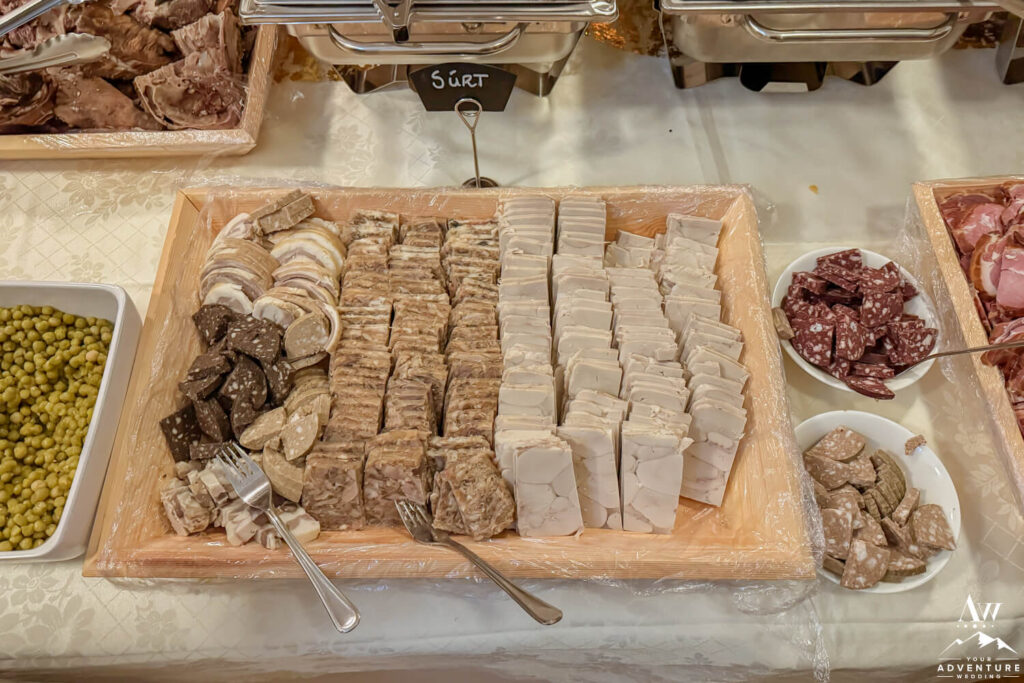
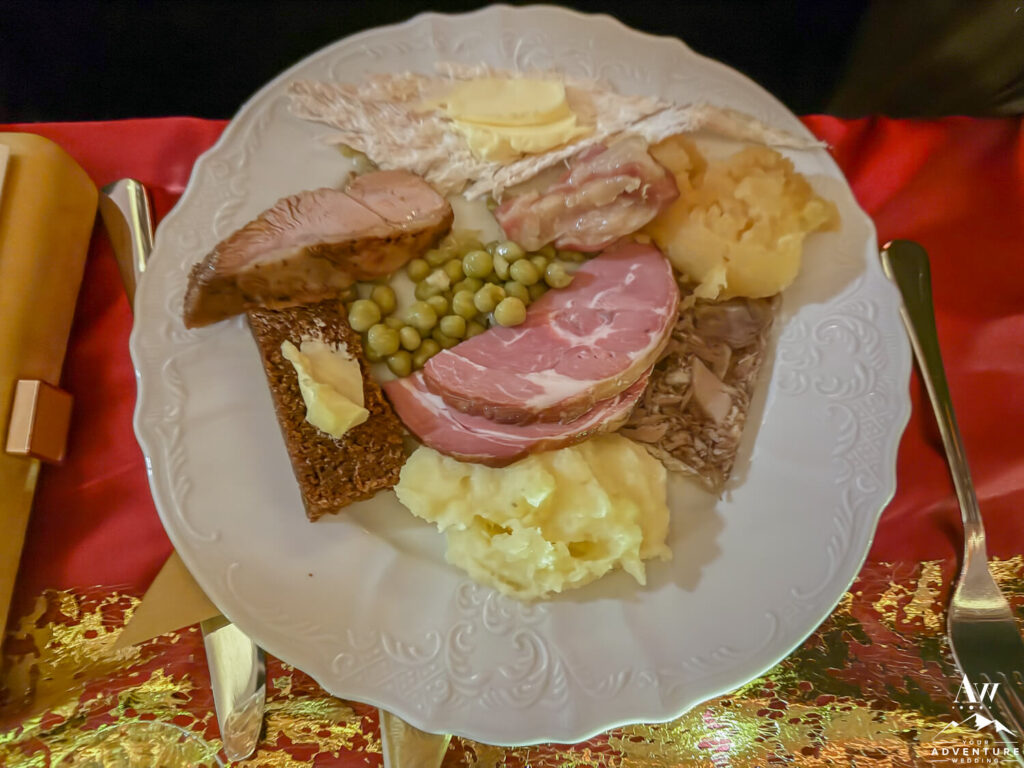
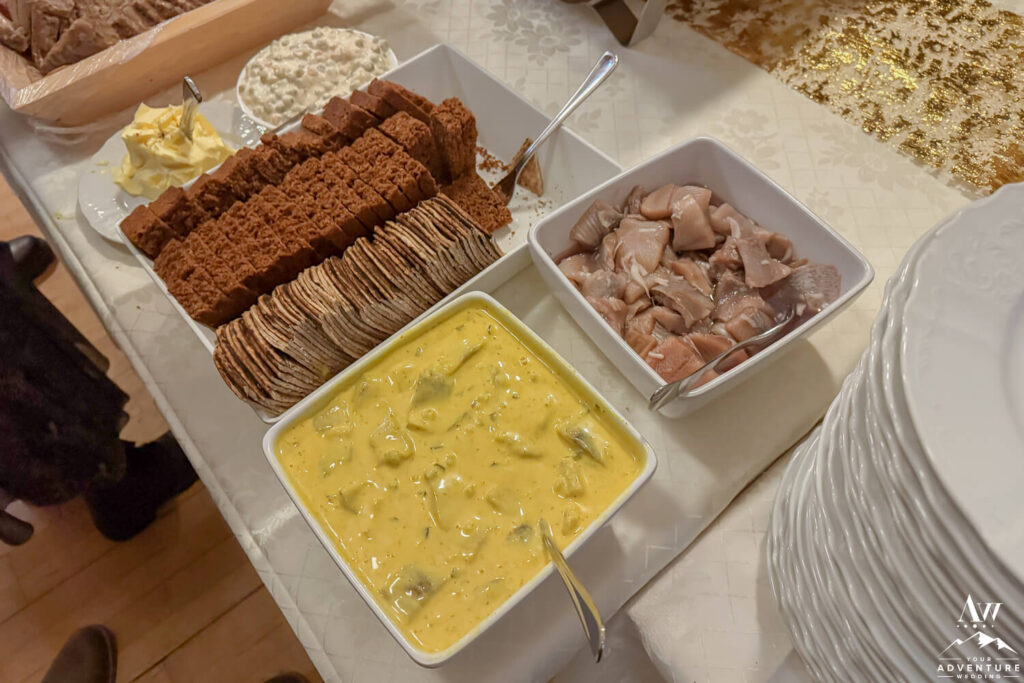
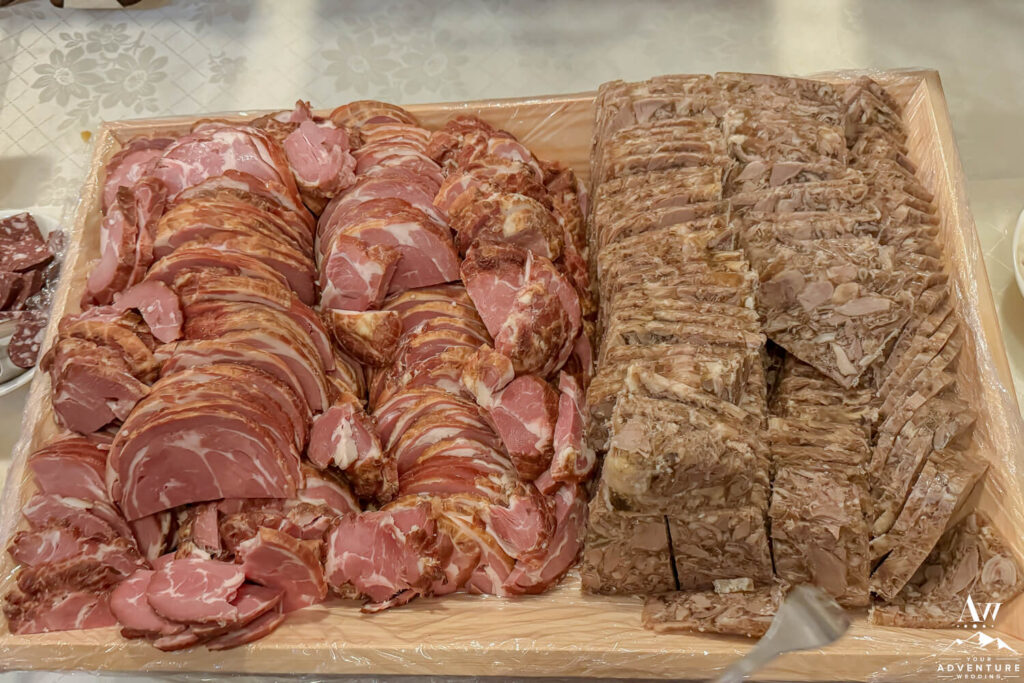
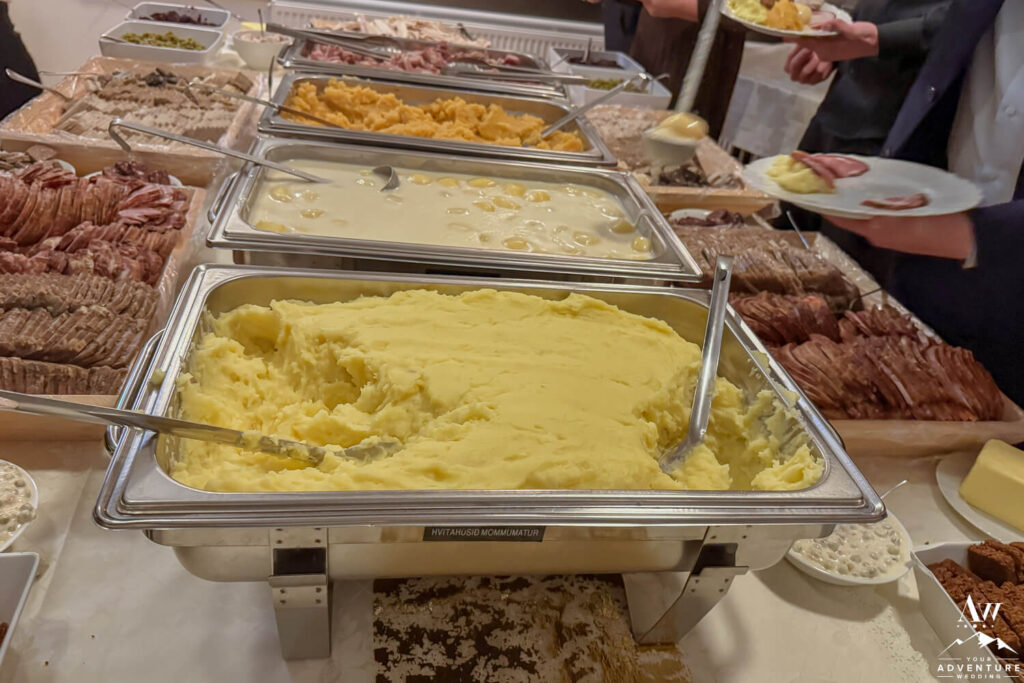
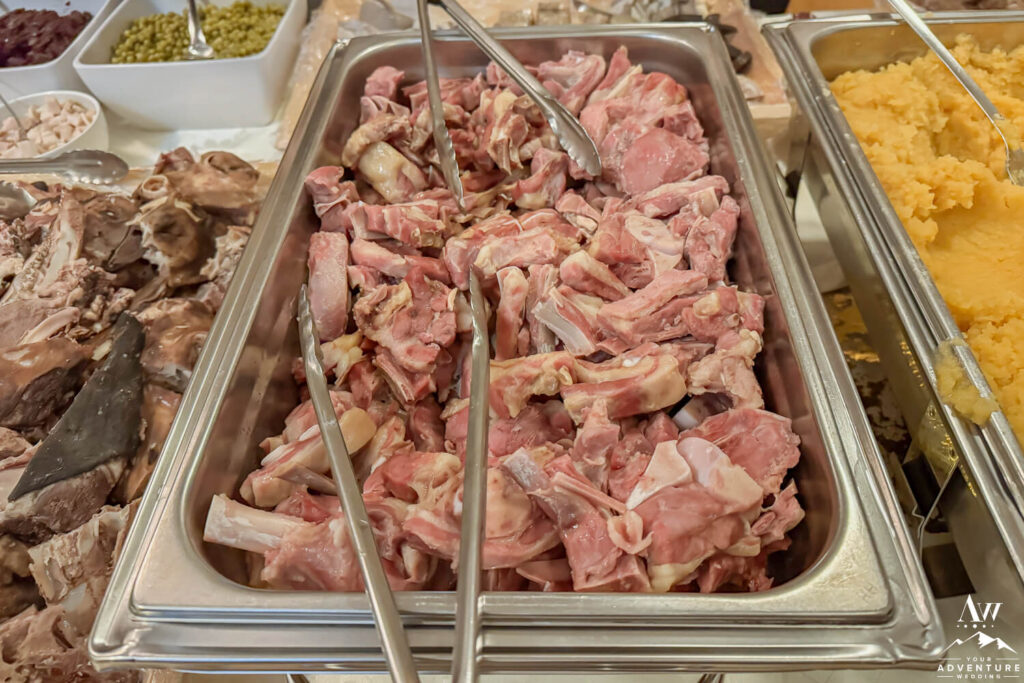
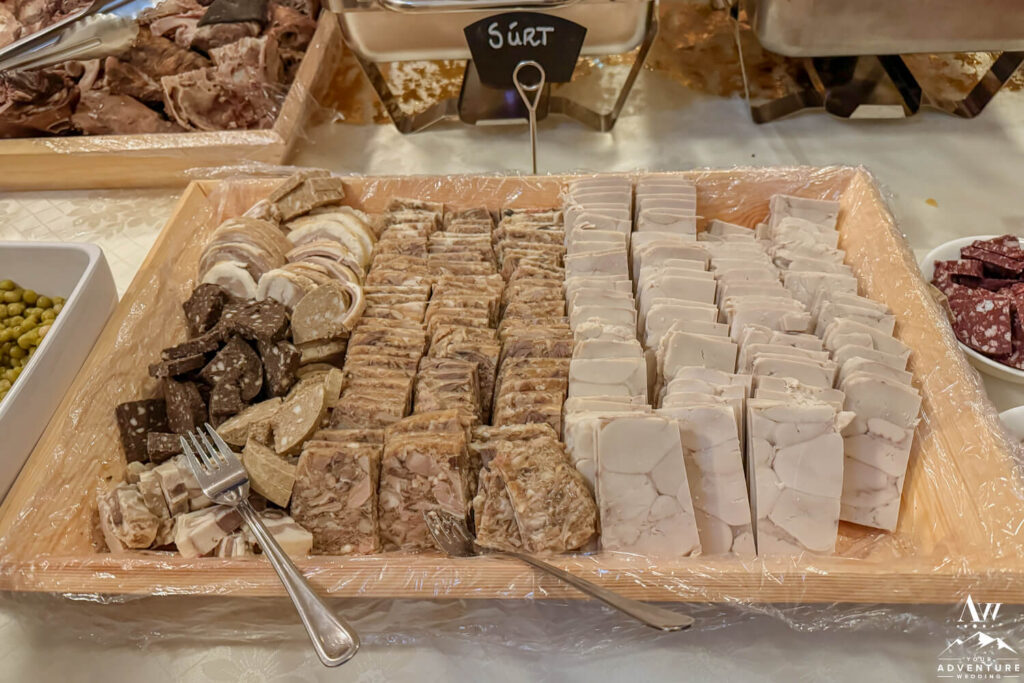
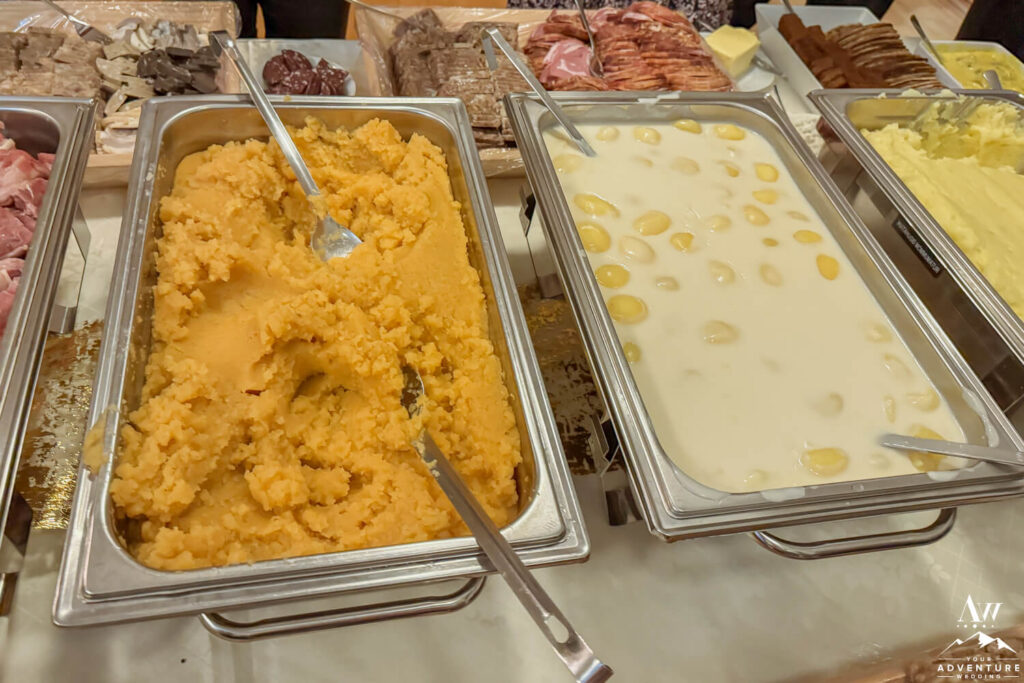
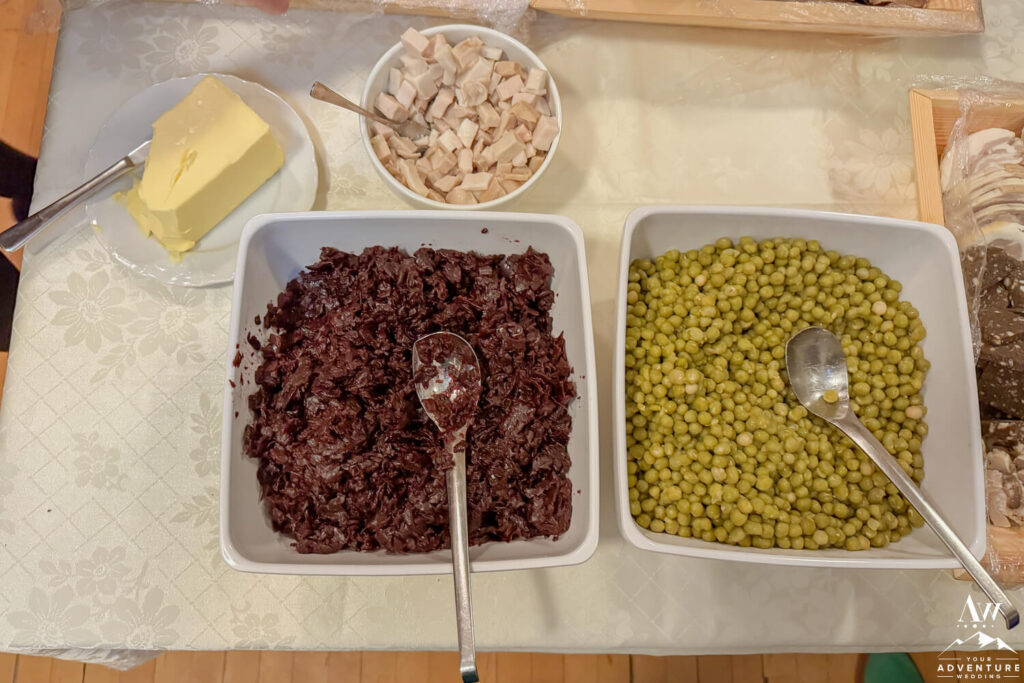
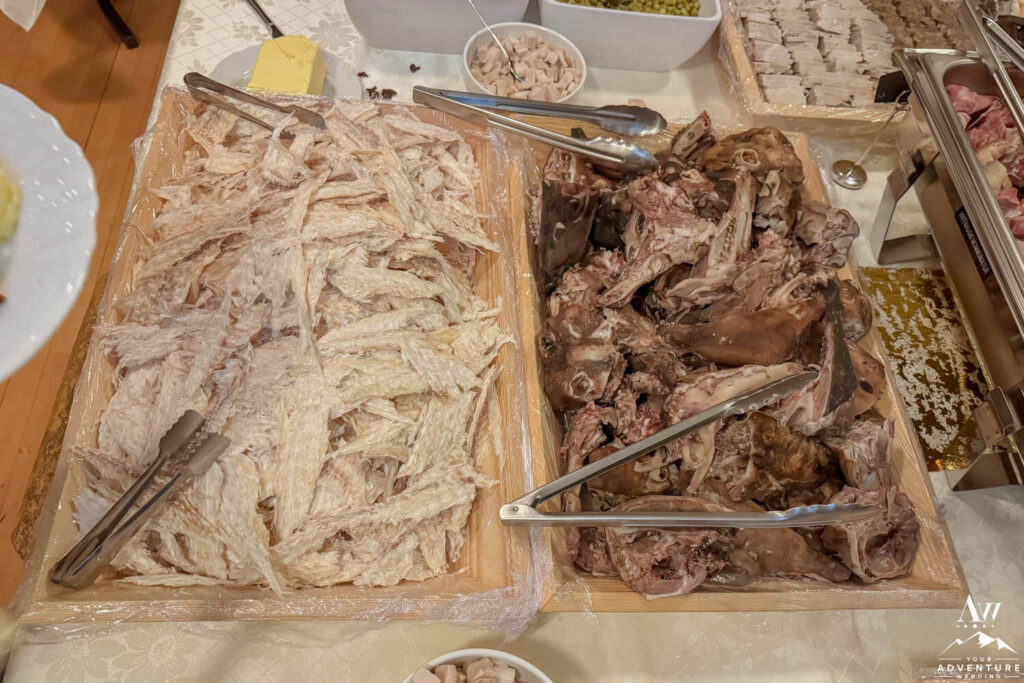
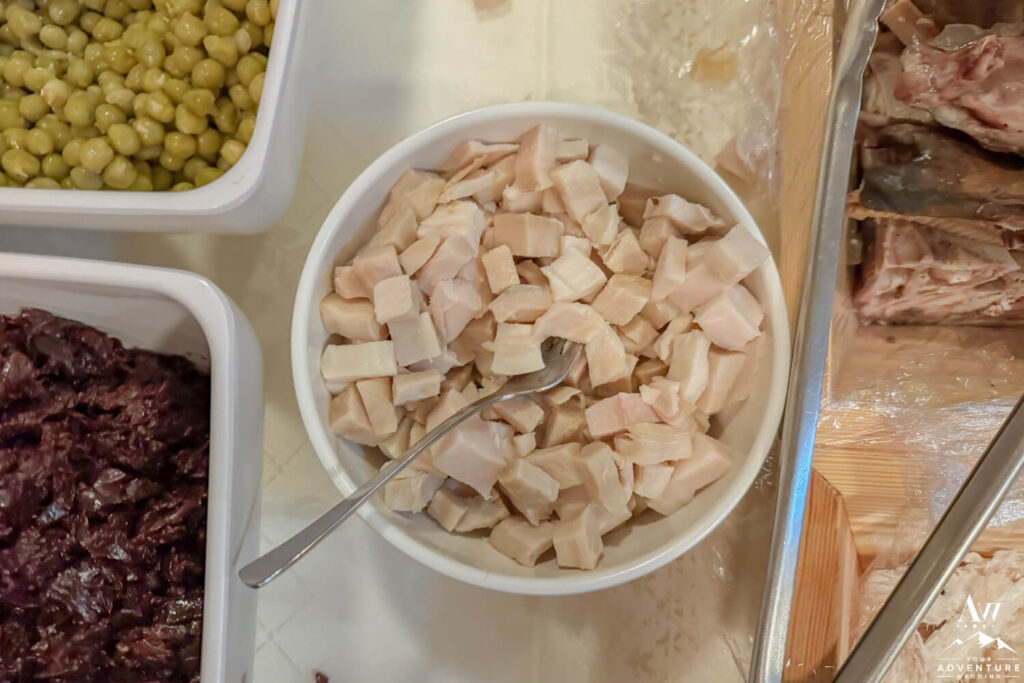
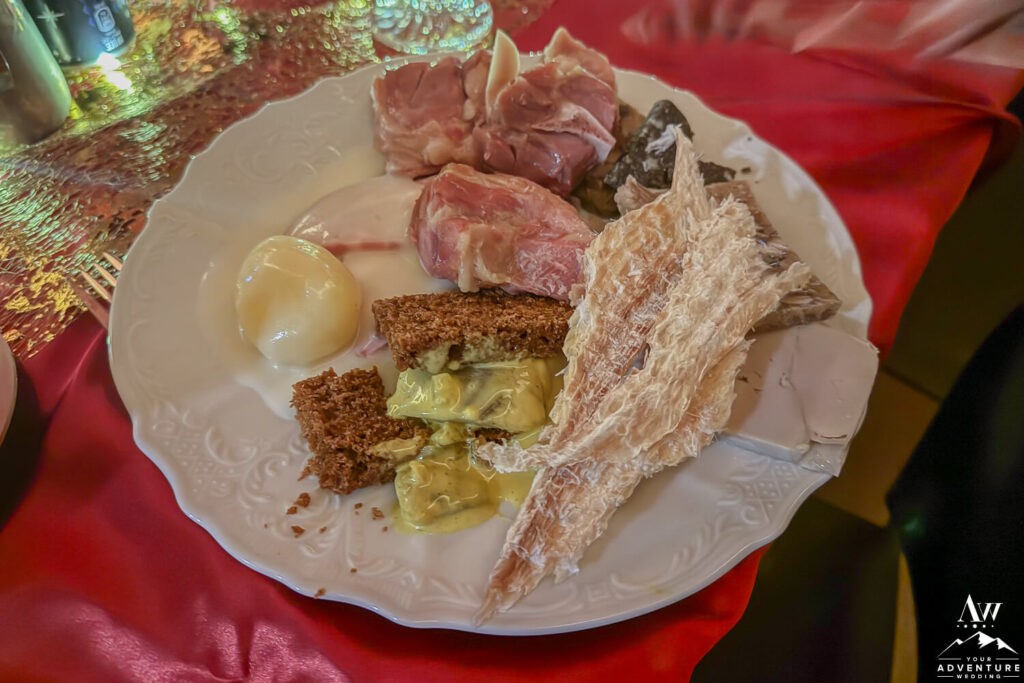
Food is at the heart of Thorrablot! In fact, it is a time of reflecting how Icelanders historically preserved ingredients to last through long winters. The selection, often called “Þorramatur,” showcases methods like curing, fermenting, smoking, and pickling.
Some well-known dishes include:
- Hákarl (fermented shark) — Perhaps the most famous (and notorious), known for its strong aroma and deep historical roots.
- Hangikjöt (smoked lamb) — A beloved staple with a rich, smoky flavor.
- Svið (singed sheep’s head) — Prepared traditionally and served in slices.
- Lifrarpylsa and blóðmör (liver and blood sausages) — Rustic, hearty foods tied to farm life.
- Rúgbrauð (dense rye bread) — Slightly sweet and often baked using geothermal heat.
- Pickled ram’s testicles — A historic delicacy reflecting nose-to-tail preservation practices.
These foods tell the story of ingenuity in a harsh environment, where nothing went to waste. Today, many gatherings balance traditional items with more familiar dishes, allowing guests to experience heritage at their comfort level.

The Cultural Meaning Behind the Festival
In conclusion, beyond the menu, Thorrablot represents continuity. Truly, a way of honoring ancestors and remembering how communities thrived despite isolation and extreme weather. To reiterate, we must not forget, to have respect for tradition, gratitude for shared resources, humor in the face of hardship and pride in Icelandic identity!
Lastly, a celebration of survival, storytelling, and togetherness. For couples planning a winter celebration, drawing inspiration from Thorrablot whether through storytelling, communal dining, or a nod to Icelandic traditions, they can add an authentic cultural touch that honors the season’s spirit of warmth and togetherness! Feel free to contact us for more information!
© 2026, Iceland Wedding Planner / Your Adventure Wedding; All Rights Reserved.